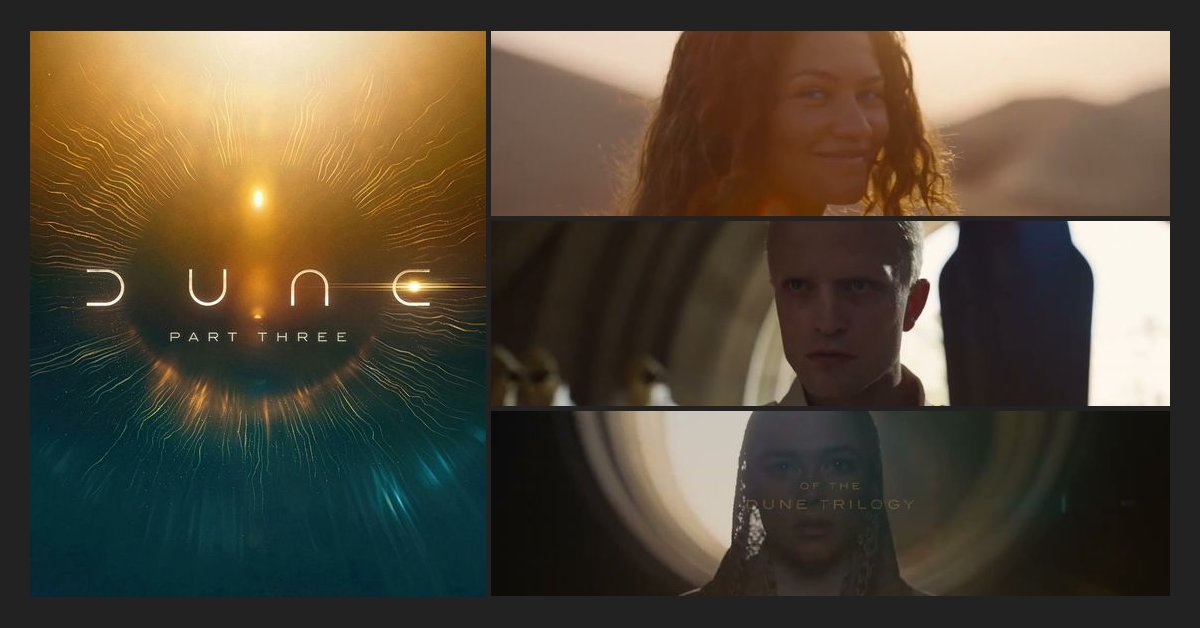

I just walked out of the theater and honestly, I'm sitting in my car processing it all. My mind feels heavy, like I've been carrying the weight of Arrakis on my shoulders for three hours. It wasn't the triumphant, explosive finale I think some people might be expecting. It's more of a quiet, philosophical gut-punch. I keep thinking about that final shot of Paul looking out over the desert, and what it means for someone to win everything and lose themselves in the process. It's haunting me a little.
🎬 Watch the Official Trailer
What's Dune: Part Three About?
This is the conclusion to Villeneuve's trilogy, adapting Dune Messiah. It picks up after Paul's victory, focusing on the heavy burden of his prescience and the unintended, often terrible, consequences of his holy war. It's less about epic battles and more about the corrosion of power, prophecy, and whether you can ever truly control the future you set in motion.
What Works in Dune: Part Three
- ✓ Timothée Chalamet's performance is devastating. He shows Paul as a ghost in his own body, trapped by visions, and it's heartbreaking to watch.
- ✓ The sound design is a character itself. The sudden, crushing silence in the throne room scenes created more tension than any score could.
- ✓ Villeneuve's visual restraint is masterful. He uses vast, empty spaces and close-ups on faces to build dread instead of relying on CGI spectacle.
- ✓ The moral ambiguity is gripping. The movie refuses to give easy answers, forcing you to sit with uncomfortable questions about power and destiny.
What Doesn't Work
- ✗ The pacing is deliberately slow, almost glacial at times. I saw a couple of people check their phones, and I get it—it demands immense patience.
- ✗ If you're here for Jason Momoa's swashbuckling Duncan Idaho, you'll be disappointed. His role is much more subdued and functional here.
- ✗ The plot is incredibly dense with political and mystical machinations. You really need to remember details from Part Two to fully follow it.
Standout Moments & Performances
There's a scene where Paul is confronted by the consequences of his Fremen jihad, shown not through battle, but through a single, silent exchange with a broken prisoner. Chalamet doesn't say a word, but you see his entire soul fracture. Another moment that stuck with me is a simple walk through a corridor with Alia. The way Rebecca Ferguson and the young actress playing Alia mirror each other's movements is chilling—it visually shows the curse of prescience passing to the next generation. It made my skin crawl in the best way.
Main Cast: Timothée Chalamet, Zendaya, Jason Momoa, Florence Pugh, Rebecca Ferguson
Direction, Music & Visuals
Villeneuve's direction is confident and uncompromising. He trusts the audience to sit in the discomfort. Greig Fraser's cinematography is stunning, but in a bleaker, more austere way—lots of harsh whites and deep shadows in the palace, contrasting with the now-familiar oranges of Arrakis. Hans Zimmer's score is more sparse and mournful, using those haunting vocal motifs to underline the tragedy. The entire cast is excellent, but it's Chalamet's and Zendaya's show. Zendaya, in particular, brings such grounded strength and sorrow to Chani as she watches the man she loves become a monument.
Director: Denis Villeneuve
Genres: Science Fiction, Adventure, Thriller
Who Should Watch Dune: Part Three?
Fans of the books who appreciate the philosophical depth of Dune Messiah. Viewers who loved the first two films for their atmosphere and world-building, not just the action. Anyone who enjoys challenging, slow-burn cinema that prioritizes ideas and character tragedy over crowd-pleasing moments. You need to be in the mood for a think-piece, not a blockbuster.
Who Might Want to Skip?
If you thought Dune: Part Two was too slow, this will be a slog. Also, skip it if you're looking for a straightforward, good-vs-evil space opera with a neat, happy ending. This is the antithesis of that.
Final Verdict
This is a brilliant, demanding, and ultimately sad film. It's a perfect conclusion to Villeneuve's vision, but it's not necessarily an 'enjoyable' night at the movies in the traditional sense. It stuck with me, it made me think, and it respected the source material's complexity. I would absolutely recommend it to the right person, but with major caveats about its pace and tone. Would I watch it again? Yes, but not for fun—for study. It feels like an important, final statement.