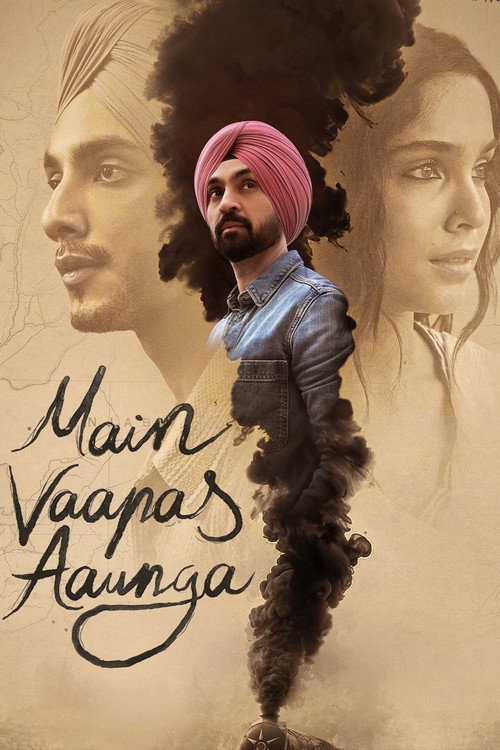
Main Vaapas Aaunga
मैं वापस आऊंगा
Haunted by a childhood romance and recollections of love lost during the 1947 Partition of India, 95-year-old Ishar Singh Grewal shares his story with his grandson Nirvair, the past unfolding through memories of migration, longing, and a romance that endures across generations.
Review
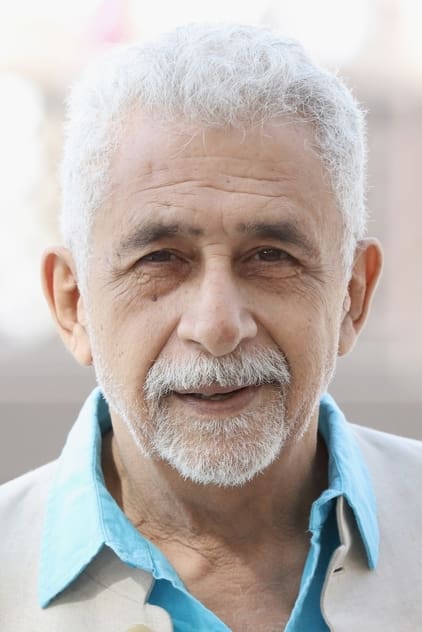
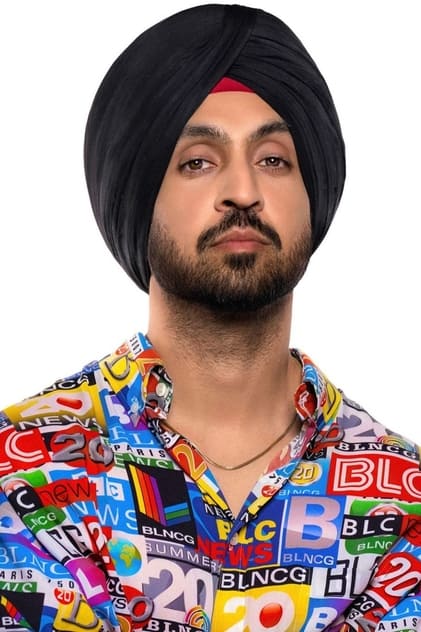
Imtiaz Ali’s “Main Vaapas Aaunga” is a sprawling, ambitious romance that tries to bridge the trauma of Partition with a love story spanning seven decades. The film opens with 95-year-old Ishar Singh Grewal (Naseeruddin Shah) telling his grandson Nirvair about a girl he left behind in 1947. From there, we slip into flashbacks where young Ishar (Vedang Raina) falls for a Muslim neighbor, Shama (Sharvari), just as communal violence tears their village apart. The first half is a lyrical, heartbreaking journey of migration and loss, with Ali capturing the chaos of Partition in intimate, human-scale moments. The middle section, set in present-day Delhi, drags as Ishar’s search for Shama becomes a repetitive loop of near-misses and old letters. The mystery element—who is the woman in the faded photograph?—keeps you guessing, but the payoff feels rushed. Cinematography by Ravi Varman uses warm sepia for the past and cold blues for the present, a neat but overused trick. The music by A.R. Rahman has two standout tracks—“Dooriyan” (a haunting qawwali) and “Vaapas” (a folk-infused duet)—but the score is uneven, sometimes swelling too loudly over quiet moments. Vedang Raina is a revelation: his young Ishar is raw, impulsive, and achingly vulnerable. Sharvari matches him with a quiet fierceness, especially in a scene where she hides behind a door, listening to her family plan her escape. Naseeruddin Shah, though, carries the film’s emotional weight with just his eyes and a trembling voice. Diljit Dosanjh appears in a cameo as a truck driver who helps refugees; it’s a small role but he steals every second. The runtime of 167 minutes is a problem—the middle act loses momentum with a subplot about Nirvair’s own romance that feels like filler. Still, when the film lands its final scene (a wordless reunion in a mustard field), it earns its tears.
Pros
- ✓Vedang Raina and Sharvari deliver breakout performances; their chemistry in the Partition-era segments is electric and heartbreakingly real.
- ✓Imtiaz Ali’s direction of the migration sequences is visceral—the chaos of a train station, the silence of a burning village—without resorting to melodrama.
- ✓Naseeruddin Shah’s performance as the elderly Ishar: he says more with a single sigh than most actors do in monologues, and his voiceover narration adds poetic weight.
Cons
- ✗The present-day subplot involving Nirvair’s girlfriend is underdeveloped and feels like padding, adding 20 minutes to an already long runtime.
- ✗The mystery element is resolved too neatly in the third act, with a coincidence that strains credibility and undermines the realistic tone of the first half.
“Main Vaapas Aaunga” is a flawed but deeply felt romance that mostly delivers on its emotional promise. The film’s first hour is some of the best work Imtiaz Ali has ever done—raw, specific, and unafraid of the ugliness of history. The performances, especially from Vedang Raina and the legendary Naseeruddin Shah, elevate even the saggy middle. But the overlong runtime and a clunky present-day plot keep it from being a masterpiece. If you have patience for slow-burn love stories and can overlook a convenient ending, this will stay with you. It’s not a perfect film, but it’s a memorable one. I’d recommend it to anyone who loves classic Bollywood romances like “Veer-Zaara” or “Mausam,” but with a warning: bring tissues and a willingness to forgive a few narrative shortcuts. The final shot alone is worth the price of admission.
🎯 Who Should Watch
Fans of Imtiaz Ali’s earlier work (especially “Jab We Met” and “Tamasha”), lovers of Partition-era dramas, and anyone who enjoys slow, character-driven romances with a nostalgic, melancholic tone.
⭐ Standout Elements
The raw, unglamorous depiction of Partition as seen through a child’s eyes; the dual timeline structure that actually earns its emotional payoff; and the haunting music, particularly the qawwali “Dooriyan,” which becomes a character in itself.
🎬 Overall Impact
A must-watch film that delivers on both entertainment and emotional depth.
📽️ This film represents strong filmmaking that deserves your attention.
About the Reviewer
Rajesh Kumar is a entertainment journalist with a passion for Indian cinema, covering Bollywood and South Indian films.